Welcome to Ajayi Crowther University Repository

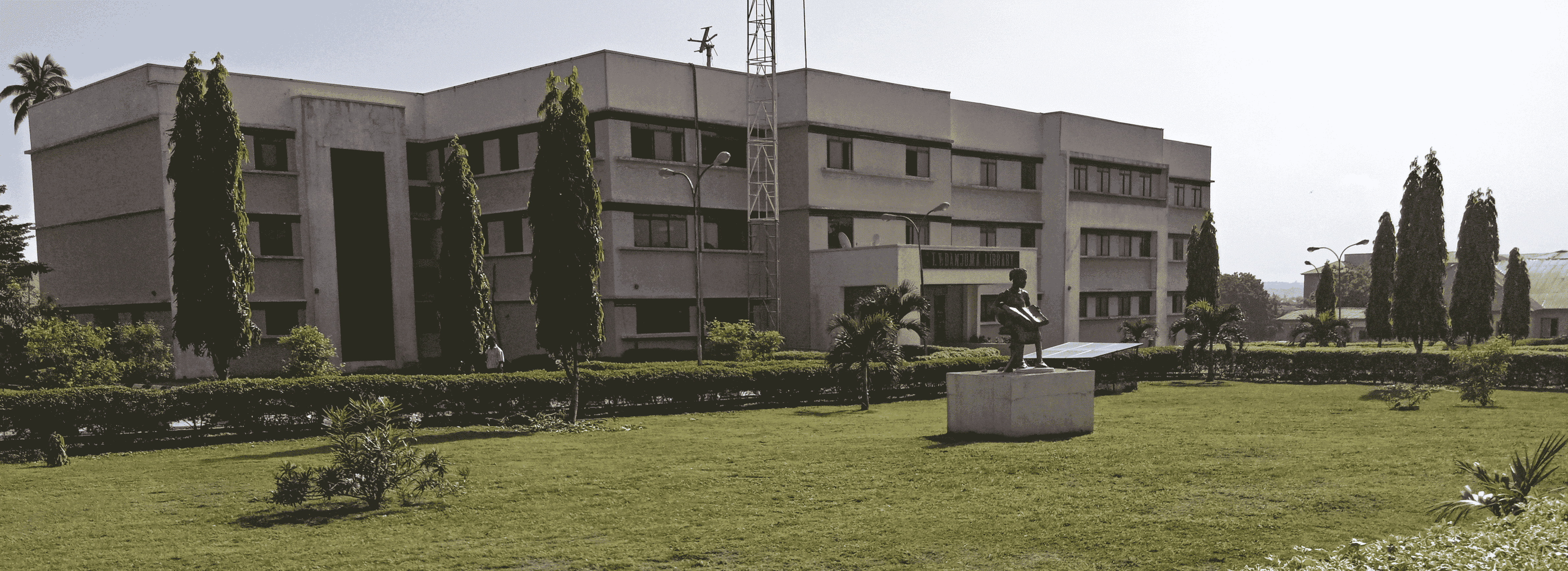
Communities in ACU Repository
Select a community to browse its collections.
Recent Submissions
In vitro and in vivo antioxidant activities of the aqueous extract of Celosia argentea leaves
(Indian J Pharmacol., 2011-05) Malomo, S. O.; Ore, Ayokanmi; Yakubu, M. T.
Objective:
The aqueous extract of Celosia argentea var. cristata L. leaves at 100, 200, and 400 mg/kg body weight (b.w.) was investigated against cadmium (Cd)-induced oxidative stress in Wistar rats. The in vitro antioxidant of the extract was evaluated using ammonium thiocyanate, reducing power, and membrane stabilizing models.
Materials and Methods:
For the in vivo study, 30 male rats (Rattus norvegicus) weighing 138.02 ± 7.02 g were completely randomized into 6 groups (A–F) of 5 animals each. Animals in groups A and B received 0.5 ml of distilled water and the same volume containing 8 mg/kg b.w. of Cd, respectively, for 7 days orally. Animals in groups C, D, E, and F were treated like those in group B except that they received 100 mg/kg b.w. of ascorbic acid, and 100, 200, and 400 mg/kg b.w. of the extract, respectively, in addition to Cd.
Results:
Phytochemical screening revealed the presence of alkaloids (0.61%), saponins (2.93%), cardiac glycosides (0.21%), cardenolides (0.20%), phenolics (3.26%), and flavonoids (2.38%). A total of 10 mg/ml of the extract inhibited linoleic acid oxidation by 67.57%. The highest reducing power was 100 mg/ml as against 10 mg/ml for ascorbic acid. In addition, 2 mg/ml of the extract produced a membrane stabilizing activity of 63.49% as against 77.46% for indomethacin. Compared with the distilled water control group, the administration of Cd alone significantly (P < 0.05) decreased the alkaline phosphatase activity of the rat liver and brain. This decrease was accompanied by a corresponding increase in the serum enzyme. The simultaneous administration of the extract and Cd produced an enzyme activity that compared favorably (P > 0.05) with the animals that received Cd and ascorbic acid. In addition, the reduction in the superoxide dismutase and catalase activity of the liver and brain of the animals, serum uric acid, albumin and bilirubin, and also the increase in the serum malondialdehyde content in animals treated with Cd alone was attenuated by the extract; the values compared well (P > 0.05) with those simultaneously administered with Cd and ascorbic acid.
Conclusion:
Overall, the results indicated that the aqueous extract of C. argentea leaves attenuated Cd-induced oxidative stress in the animals, with the best result at 400 mg/kg b.w. The antioxidant activity of the extract may be attributed to the phenolic and flavonoid components of the extract. The induction of antioxidant enzymes and scavenging of free radicals may account for the mechanism of action of the extract as an antioxidant.
Transnational Crime
(Oxford University Press, 2025) Faseke, Babajimi Oladipo; Falode, Adewunmi James
Imagery Intelligence in Contemporary Counterterrorism: A Comparative Study of Nigeria and Somalia
(LASU JOURNAL OF PEACE & SECURITY STUDIES, 2026) Faseke, Babajimi Oladipo
The study examines the use of imagery intelligence (IMINT) in counterterrorism operations against Boko Haram in Nigeria and Al‑Shabaab in Somalia. Despite years of sustained military campaigns, both insurgent groups have remained resilient, continuing to operate in difficult terrains as well as exploiting intelligence gaps within state security structures. While modern militaries increasingly possess advanced surveillance technologies, the practical role and effectiveness of imagery-based intelligence in counterterrorism operations in Africa remain insufficiently examined. It is against this backdrop that the study investigates how IMINT contributes counterterrorism strategies in both Nigeria and Somalia. Situating IMINT within the broader framework of Geospatial Intelligence (GEOINT), the paper adopts a qualitative and descriptive approach based on a review of relevant scholarly literature and documented operational experiences from Nigeria and Somalia. The analysis suggests that IMINT has enhanced the ability of security forces to identify militant camps, track movements, and support military operations against insurgent groups.
However, its effectiveness depends largely on enhancing institutional capacity, inter-agency coordination, and its integration with other intelligence fields. The paper concludes that while IMINT alone cannot defeat insurgent movements, it remains an increasingly valuable component of contemporary counterterrorism strategy when integrated within a broader intelligence architecture.
Green reduction of phytic acid in Artocarpus heterophyllus (Jackfruit) seed using phytase from Aspergillus aculeatus JF3
(Indian Journal of Biochemistry & Biophysics, 2026-07-21) Fasiku, Samuel Adedayo; Agahiu, Ruth Odogo; Awe, Ezekiel Damilare; Ewuzie, Ifeanyi Joseph; Bamigboye, Oluwabunmi Florence
Microbial phytase enhances food quality by hydrolysing phytate into simpler derivatives and releasing elements that serve as macroelements. Fungi were isolated from the pulp and seeds of jackfruit on potato dextrose agar. The fungi were screened for phytase production, and the best phytase producer was selected and identified molecularly using the ITS region. Phytase production by the selected fungus was optimised. The effects of temperature, pH, and cations on the produced phytase were determined. Jackfruit was treated with the selected fungus, and proximate analyses of both treated and untreated jackfruits were carried out. The top phytase producer, with a hydrolytic index of 2.67, was identified as Aspergillus aculeatus JF3, with accession number OQ992634. Maximum phytase production was recorded in a medium containing Na+, sucrose, peptone, and Triton X-100. Phytase activity of Aspergillus aculeatus JF3 was relatively stable between 35 and 85°C and from pH 3 to 9. Iron II positively influenced the phytase activity of Aspergillus aculeatus JF3. The phytic acid content of jackfruit treated with Aspergillus aculeatus JF3 decreased by 18% compared to the untreated samples. The phytase-producing Aspergillus aculeatus JF3 isolated from Artocarpus heterophyllus exhibited stability across different temperatures and pH levels, enhancing nutrient bioavailability in Artocarpus heterophyllus.
Enhancing the Production of Reducing Sugars from Cassava Peels by Pretreatment Methods
(International Journal of Science and Technology, 2012) Olanbiwoninu, Afolake Atinuke; Odunfa, Sunday Ayodele
Cassava peel is one of the major biomass wastes in Nigeria obtained from production of cassava tuber for human consumption, starch production and industrial uses. The objective of this work was to investigate the optimal condition for pretreating cassava peel with dilute sulphuric acid, methanol with catalyst (organosolv) and alkali prior to microbial enzymatic hydrolysis for the production of fermentable sugars. The pretreated samples reducing sugar yield was measured after enzymatic hydrolysis. The result shows that acid hydrolysis using sulphuric acid at a concentration of 0.1M at 120oC for 30 min gave a maximum reducing sugar yield of 88.8% and 98%, followed closely by methanol treated peels (78 and 98% ) while alkali pretreated peels produce the least (66 and 88%) for Pseudomonas flourescens and Aspergillus terreus respectively. In this study, H2SO4 and methanolysis treated peels prior to enzymatic hydrolysis had a greater capacity for hydrolyzing cassava peels than NaOH and also combination of pretreatments method with enzymatic treatment is an alternative to improve efficiency of reducing sugar production from cassava peel.